Top 5 Reasons Student Visas Get Refused and How to Avoid Them
Getting admission to a foreign university is an important achievement, but university admission does not automatically guarantee a student visa. Visa officers assess whether an applicant meets the immigration requirements and whether the proposed study plan, financial situation, and supporting documents are credible.
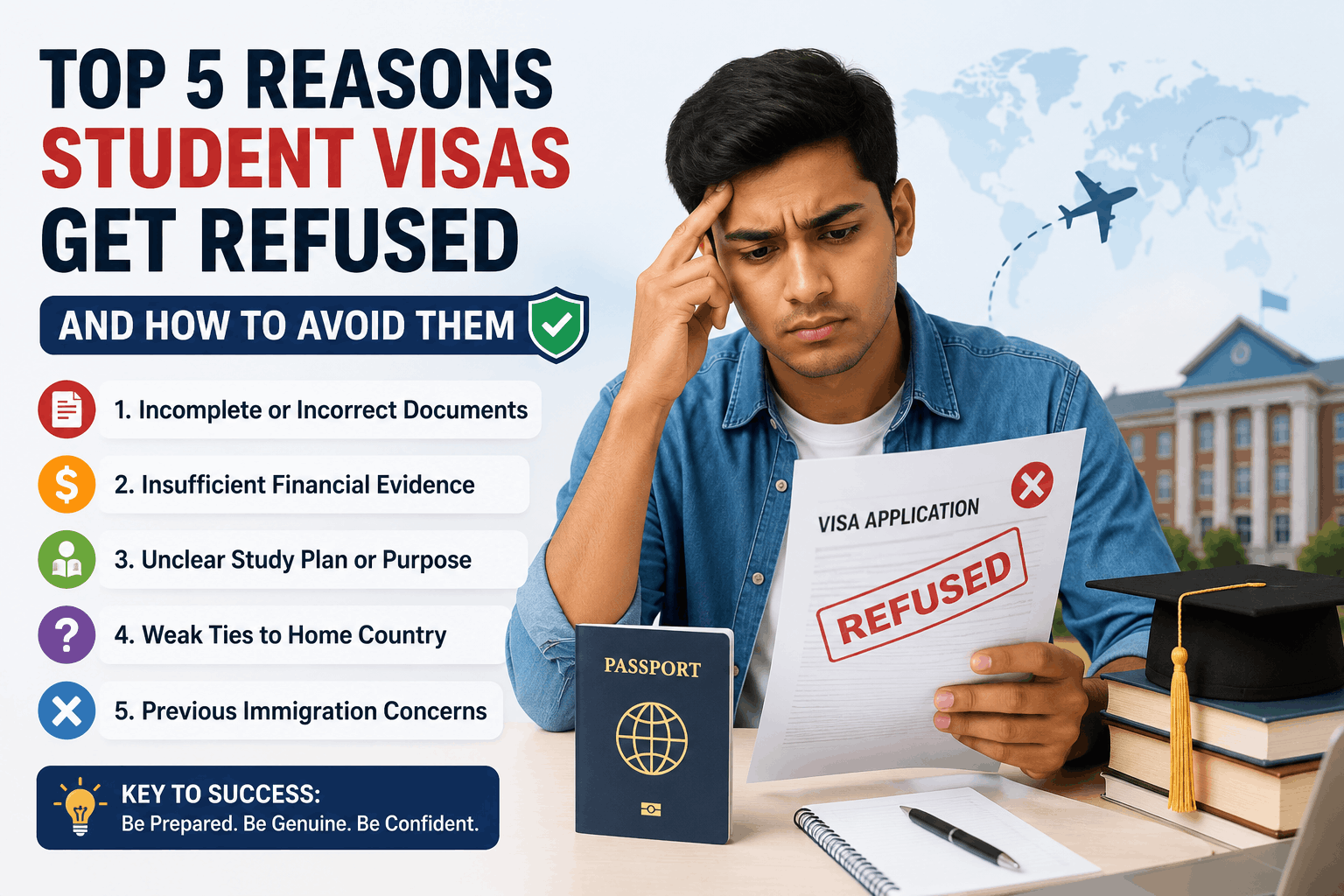
Although requirements vary by country, several common problems repeatedly appear in student visa applications. Here are five major reasons for refusal and how students can reduce the risk.
1. Insufficient or Unclear Financial Evidence
One of the most important parts of a student visa application is proving that you can afford your education and living expenses.
Visa authorities may examine tuition fees, living expenses, available funds, the source of the money, and how you intend to finance your studies. For example, Canada requires applicants to demonstrate funds for tuition, living expenses and transportation, while the UK has specific financial evidence requirements.
How to avoid it:
- Maintain sufficient funds according to the destination country's requirements.
- Provide genuine and verifiable bank statements.
- Clearly explain large or recent deposits.
- Provide evidence of the sponsor's income and source of funds when applicable.
- Make sure financial documents meet the required date and holding-period rules.
- Do not submit altered or misleading financial documents.
Tip: A large bank balance without a credible source of funds can raise questions. Your financial documents should tell a consistent story.
2. Weak Study Plan or Unclear Academic Purpose
A visa officer needs to understand why you want to study this particular course at this particular university.
An unexplained change in academic field, an inappropriate course choice, or a study plan that does not connect with your previous education or career can create concerns about your genuine study intentions.
Australia's current Genuine Student assessment, for example, considers the applicant's circumstances, reasons for choosing the course and institution, understanding of the course, and how the course will benefit the applicant.
How to avoid it:
- Explain why you selected the course.
- Connect the course with your previous education or professional experience.
- Explain why the university is suitable for your goals.
- Clearly describe your career plans after graduation.
- Avoid generic statements copied from the internet.
- Be prepared to explain your study plan during an interview.
3. Incomplete, Inconsistent or Incorrect Documents
A student visa application can become risky when information in different documents does not match.
For example, differences between your application form, passport, academic certificates, employment documents, bank statements, admission letter, or study plan can create doubts.
Official UK guidance, for example, lists financial evidence and other supporting documents among the requirements that may need to be provided with a Student visa application.
How to avoid it:
Before submission, carefully check:
- Passport details
- Academic information
- Employment history
- Study gap explanation
- Financial information
- Sponsor details
- University and course information
- Travel history
- Previous visa refusals
- Translations and certifications where required
Never submit fake or altered documents. Immigration authorities may verify information, and providing false information can have serious consequences.
4. Poor Performance in the Visa Interview
Some applicants have excellent academic and financial documents but struggle when answering questions during an interview.
Typical questions may include:
- Why did you choose this university?
- Why did you select this course?
- Why this country?
- What are your career plans?
- Who will finance your education?
- What does your sponsor do?
- What will you do after graduation?
- Why are you changing your academic field?
- Why do you have an education gap?
How to avoid it:
- Understand your application completely.
- Know your university, course and tuition fees.
- Understand your financial arrangements.
- Practice answering questions naturally.
- Give honest and direct answers.
- Do not memorize complicated answers word-for-word.
- Never provide information that contradicts your application.
For countries that assess genuine student intentions through interviews or written responses, credibility can be an important part of the decision.
5. Weak Explanation of Previous Visa Refusals or Study Gaps
Previous visa refusals or significant education and employment gaps do not necessarily mean your new application will be refused. However, unexplained circumstances can create concerns.
If you previously received a visa refusal, you should understand exactly why it happened and demonstrate what has changed or what additional evidence is now available.
How to avoid it:
- Never hide previous visa refusals when disclosure is required.
- Read the previous refusal letter carefully.
- Address the refusal reason directly.
- Explain genuine education or employment gaps.
- Provide supporting evidence where appropriate.
- Ensure your new application is materially stronger rather than simply repeating the previous application.
Canada's immigration authority specifically advises applicants to understand the reason for a previous refusal before reapplying rather than submitting the same information again.
How to Make Your Student Visa Application Stronger
A successful student visa application should present a consistent and credible overall profile.
Before submitting your application:
✅ Choose a course that makes academic and career sense
✅ Research your university and destination country
✅ Prepare sufficient and genuine financial evidence
✅ Explain your source of funds clearly
✅ Organize all required documents carefully
✅ Address study gaps honestly
✅ Disclose previous visa refusals where required
✅ Prepare for possible interviews
✅ Make sure all information is consistent
✅ Never use fraudulent or misleading documents
Final Thoughts
A student visa application is more than a collection of documents. The visa officer needs to see a clear, credible and consistent story: why you want to study, how you will finance your education, why the chosen course makes sense for you, and how your studies fit into your future plans.
Requirements differ significantly between countries, so students should always check the latest official immigration requirements for their chosen destination before submitting an application.
Global Education Service can help students understand admission and visa documentation requirements, prepare their applications, and avoid common mistakes during the study-abroad process.